Charter a bus shuttle
Shuttle transport between two points – on a fixed cadence or on demand. Set your service window and get quotes from verified operators.
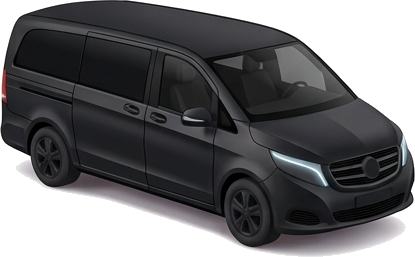
Business Van
3–6 seats · incl. chauffeur
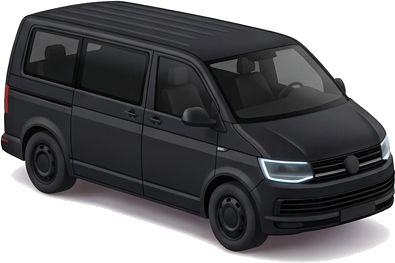
Minibus
8–17 seats · incl. driver
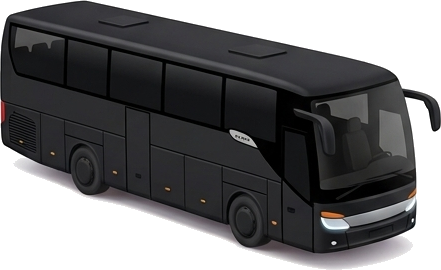
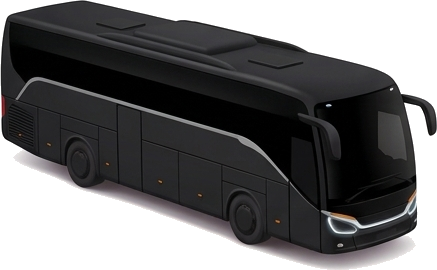
Coach
18–53 seats · incl. driver
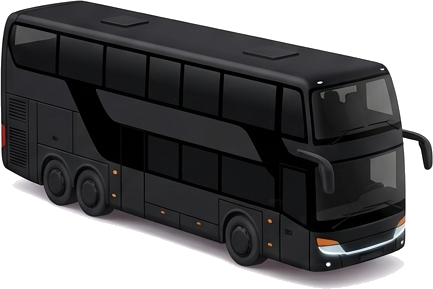
Double-Decker Bus
60–80 seats · incl. driver
When a shuttle is the right call
Whenever a lot of people travel between the same two points – but not all at the same moment.
Staff and plant transport
Employees between station, car park and plant gate – timed around the start and end of each shift.
Trade fair and congress shuttle
A loop between hotels, the city centre and the fairground for the full run of the event.
Event and festival shuttle
Visitors from the car park or station to the venue – with a tighter cadence at doors and closing.
Wedding and party shuttle
Move guests between ceremony, venue and hotel so nobody has to drive.
Airport and station shuttle
Guests, crews or travel groups to the terminal on a schedule – early mornings and late nights included.
Rail replacement and site transport
A stopgap when a line or feeder service is out for a defined period.
The right bus for your shuttle
The tighter the cadence, the smaller the bus can be. The bigger the crowd, the more seats you need per loop.
Your benefits with Busly
Always on top of your trips
Instead of going back and forth with bus companies or brokers by email and phone, everything runs through Busly: request, booking, coordination, payment and invoice.
- Direct price in secondsBook instantly or compare offers.
- Every request at a glanceStatus and offers of every request, even when you plan several trips at once.
- Live chat with the bus companySettle questions directly with your bus company.
- Pay online with easePay securely online, due only shortly before the trip.
- Invoices and documentsDownload invoices and share documents with the bus company.
Our seal of quality
Busly Verified
We check every bus company before its first trip: licence, company details and contact. And if something isn't right, we're on your side.
How It Works
Two ways to book — your call.
Submit request
Tell us route, date, passenger count. You'll see your fair market price in seconds.
Direct price
Our matching finds the right bus company, usually at a better price, without you comparing offers.
- Book instantly at the market price
- Booking confirmed once an operator accepts
- Pay only before the trip, not upfront
- Free cancellation up to 30 days before
Quotes
The classic way: Receive individual offers and compare at your own pace to pick the best.
- Individual quotes from operators
- Compare at your own pace
- Clarify questions directly via chat
- All offers clearly laid out in your customer portal
Trip is set
Bus and driver are assigned. You can relax.
How to plan your shuttle in five steps
From route to finished timetable – the order that works in practice.
- 01
Fix the route
Define the two fixed points the bus runs between – the car park and the venue, for example. Keep the route short and unambiguous: every minute of driving time stretches the loop, and with it the cadence.
- 02
Set the service window
Decide when the shuttle starts and when it stops. Build in a buffer at both ends: the first guests usually arrive earlier than expected, and the last ones leave later than planned.
- 03
Choose the cadence
Every 15, 20 or 30 minutes – or on demand if the load varies. A tight cadence means short waits but more loops. If demand spikes, it pays to run a denser cadence during peak hours only.
- 04
Do the capacity maths
Work out how many people need to move per loop: total headcount divided by the number of loops in the window. That gives you the vehicle size you need – and tells you whether one bus is enough.
- 05
Send the request and compare
Enter route, service window and cadence in the request. Busly forwards it to matching operators, you compare the quotes and book the one that fits best.
From experience
Four things that actually keep a shuttle running
Lessons from many trips that make your planning easier.
 Busly
BuslyLoop time beats cadence
One loop is the outbound leg plus the return leg plus boarding and alighting. If the loop takes longer than your target cadence, a single bus cannot hold the timetable – you need a second bus running offset.
Be realistic about boarding
Loading and unloading a full coach easily takes five to ten minutes on its own. Forget that, and you have planned a cadence no driver can keep.
Name pickup points precisely
"By the main entrance" isn't enough. Give an address or an unmistakable meeting point – and communicate exactly that to your guests. Most delays come from people searching, not from driving.
Treat peaks separately
Doors and closing are the critical windows. Adding a second bus for two hours is often cheaper than running a tight cadence all day long.
Frequently asked questions about bus shuttles
What customers ask most often before requesting a shuttle.
Unlike a single trip, a shuttle is priced by time rather than distance: the bus is tied up for the whole service window, driver included. The main cost drivers are therefore the length of the service window, the vehicle size and the number of buses deployed – not the mileage. Send a request and you'll get quotes from several operators, so you can see what the loop actually costs in your region.
Two calculations decide it. First the loop: if the outbound leg plus the return leg plus boarding takes longer than your target cadence, you need another bus. Second the capacity: divide the total number of people by the number of loops in the service window – that's the number of seats you need per departure. If you're unsure, just state the headcount and your preferred cadence; operators will factor the required fleet into their quote.
Two to four weeks is enough for a normal shuttle day. For multi-day fairs, festivals or dates in peak season between May and September, plan on three months – buses tied up for several days are far scarcer than one-off trips. Short-notice requests are still worth it: Busly reaches many operators at once, and a vehicle often frees up at short notice.
On an on-demand shuttle the bus doesn't follow a fixed timetable but runs when it's needed – when it's full, say, or when someone on site calls it in. That works well when demand fluctuates or is hard to predict. The bus is still tied up for the entire service window, so the cost barely changes. You can pick this option in the request instead of entering a cadence.
Yes. The service window may span several days – typical for fairs, congresses and festivals. Keep statutory driving and rest times in mind: continuous operation over many hours requires a driver change. Operators account for that in their quote, so you don't have to work it out yourself.
Yes, a shuttle can serve additional stops along the way – several hotels en route to the fairground, for instance. Enter the start and destination in the request and describe the intermediate stops in the free-text field. Bear in mind that every extra stop lengthens the loop and therefore the achievable cadence, so a few well-chosen stops beat many small ones.
A shuttle with special requirements?
Multiple lines, changing cadences or a whole trade fair week: that needs a free customer account.